

Designing a DiSC-Inspired Workshop Through Reflective Lens

Updated: Feb 24
For non-English versions, please use Chrome’s translation feature for support.
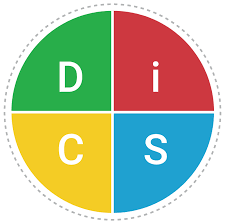
Recently, I was having a conversation with a friend about designing a DiSC workshop. She was considering using “Ghosts” as a metaphor and exploring how to integrate that into the DiSC concept. During our discussion, I shared that I’m no longer a strong believer in categorizing people too rigidly.
I’ve facilitated DiSC-inspired workshops and explored many personality frameworks—color profiles, MBTI, Enneagram, Agile Zoo, and others. For a time, I even considered pursuing certification and becoming an authorized instructor.
Over the years, however, I’ve become more intentional about how these tools are used. While they can be helpful for awareness, I’ve noticed how easily labels can become fixed identities in group settings.
These frameworks can be easily misinterpreted as categorizing people. The workshop approach needs to be handled carefully, and simply verbalizing the intention is not enough. I’ve shifted toward designing experiences that invite reflection and flexibility—so participants can explore patterns without feeling boxed in.
A Different Way: The “Four Inner Ghosts”
Instead of categorizing people, what if we explore what lives inside all of us?
We explore patterns. We reflect on our inner selves.
The goal isn’t to define who someone is. The goal is to understand what sometimes happens inside us. We all have these Ghosts within us.
These Ghosts are not identities—they are tendencies, reactions, and patterns that show up in different situations.
This approach builds self-awareness and sparks empathy. It softens the judgments we may hold toward others. Instead of placing people into fixed categories, we begin by understanding ourselves—and through that, we understand others more generously.

Empathy Starts From Within
In most cases, empathy doesn’t begin with understanding others; it begins with understanding ourselves.
When we become aware of our own triggers, shame patterns, and emotional reactions, we are less likely to project them onto others.
Through this awareness, empathy can deepen into compassion.
Research from scholars like Kristin Neff shows that self-compassion increases emotional resilience and reduces defensiveness.
Without self-awareness:
We confuse others’ behavior with our own wounds.
We react instead of respond.
We personalize what isn’t personal.
When we are whole within, what we give comes from overflow—it is shared, not sacrificed.
When we are not, we give from deficit. And giving from deficit will eventually exhaust us.
That is the thinking behind this workshop. I prefer guiding people to manage their own “Ghosts” first, because the way we handle our inner reactions becomes the way we support others when they struggle. At least that is how it has shaped who I’m becoming.
A Workshop Design: Self-Awareness + Team Bonding
This workshop is intentionally structured around the TBR 4Cs model — not as a list of activities, but as a developmental journey.
The flow moves from awareness, to language, to practice, to integration.
Connection: Meaning Before Labels
The workshop begins by inviting participants to explore the metaphor of the “Four Ghosts” through their own interpretations.
Rather than defining the Ghosts immediately, participants first construct meaning themselves. They reflect on what each Ghost might represent — its behavioral patterns.
This stage is crucial.
It lowers defensiveness.
It prevents premature labeling.
It creates shared ownership of meaning.
Only after participants see fragments of themselves in the metaphor do we move forward. Connection ensures that the framework lands on lived experience — not theory.
Concept: Introducing DiSC Through an Empathy Lens
Once participants are grounded in reflection, the DiSC framework is introduced — but not as a personality classification.
Instead, it is positioned as a language for understanding behavioral tendencies.
The emphasis shifts from:
“Who am I?” to “What patterns tend to show up under certain conditions?”
This reframing reduces rigidity and invites flexibility.
Traits are discussed as tendencies, not identities.
The framework becomes a tool for awareness — not a check box.
Concrete Practice: From Self to Others
Participants then deepen their reflection.
They examine:
Which Ghost appears most frequently in their own behavior
In what contexts it tends to surface
How it influences their interactions
The focus is internal first.
Only after self-exploration do we expand outward:
How do we respond when we notice a Ghost appearing in others?
More often than not, how we hope to be treated when our own Ghosts appear is the same kind of understanding others are seeking.
Rather than correcting personalities, participants practice supporting regulated responses.
This is where empathy becomes actionable.
Conclusion: Integration, Not Categorization
The workshop closes with synthesis.
Participants are invited to distill their insights — not about types, but about awareness.
The goal is not for people to remember four categories.
The goal is for them to leave with:
Greater self-understanding
Greater regulation
A more generous lens toward others
The 4Cs act as safeguards in this design.
They ensure that reflection comes before theory.
Experience comes before interpretation.
And empathy is built from the inside out.

Why I think this would work
Without categorizing anyone, this approach cultivates:
Self-awareness
Empathy
Emotional regulation
Team bonding
Healthier relationships
We are dynamic, complex, and constantly evolving. Our behaviors shift with context, pressure, and experience.
Perhaps the real work isn’t about identifying what type someone is.
Perhaps the real work is learning how to manage the Ghosts within us — and supporting one another when they appear.
If this design resonates with you, I hope it sparks new ways of thinking about how we introduce personality frameworks. And if you choose to experiment with it in your own context, I would genuinely love to hear what you discover.


Comments